
SAN CLEMENTE, Calif. — November 11, 2026 — San Clemente voters have delivered a decisive message at the ballot box: Protecting the city’s beaches and neighborhoods from natural disasters is important, but residents are unwilling to pay another cent in local sales taxes to accomplish it.
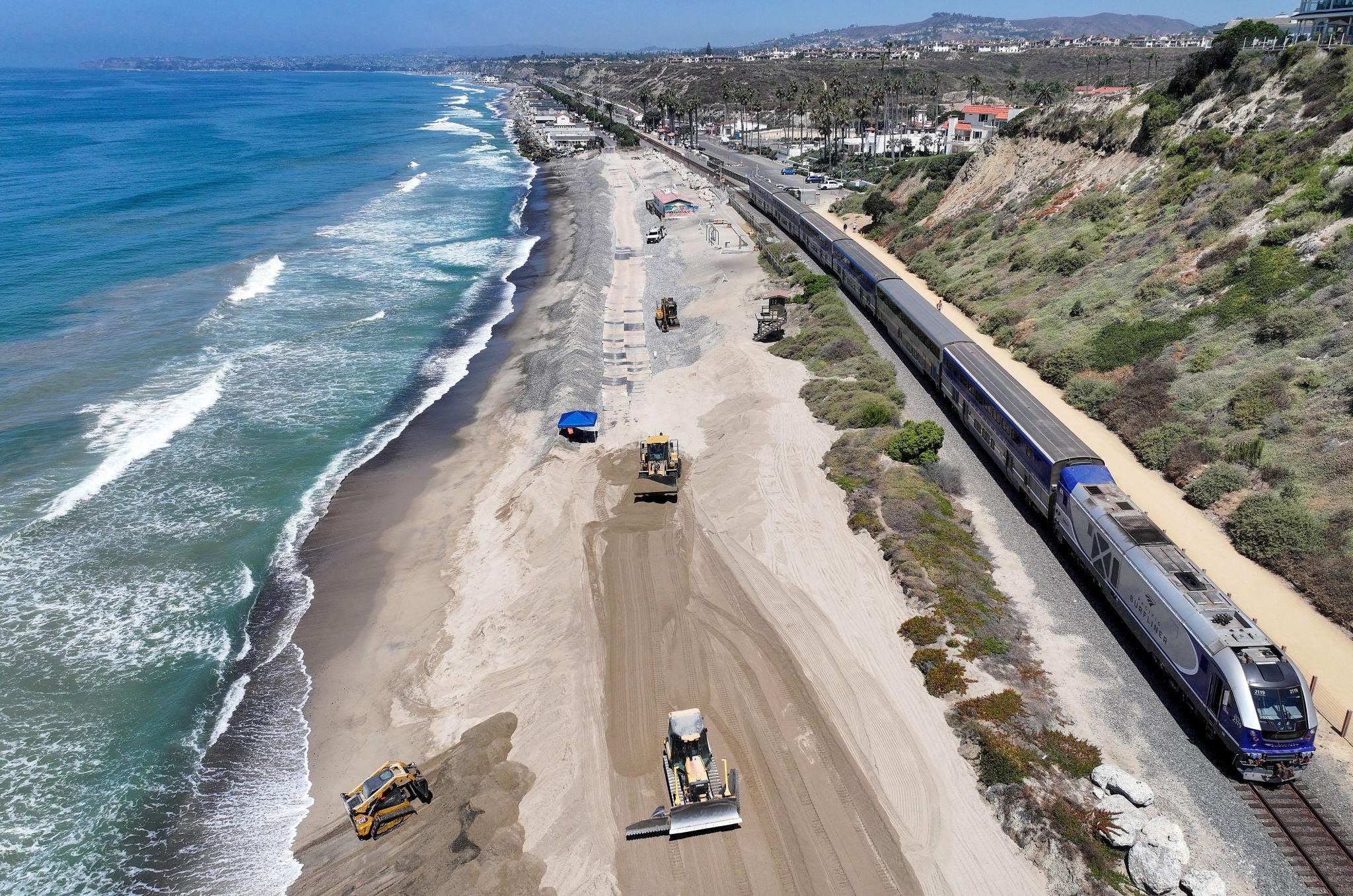
Preliminary results from the November 3 election show nearly 64% of voters opposing Measure M, a proposed one-percentage-point sales tax increase intended to generate approximately $15 million annually for coastal restoration and wildfire protection.
The measure would have increased the city’s sales tax rate from 7.75% to 8.75%, directing half of the new revenue toward protecting San Clemente’s beaches and the other half toward fire prevention and emergency preparedness.
Instead, the apparent defeat leaves city leaders confronting a familiar problem: How does a coastal community protect its most valuable natural resources without a reliable, dedicated source of funding?
For San Clemente, a city whose identity and economy are deeply connected to its coastline, the answer could shape the next decade.
San Clemente, CA+1
A Second Rejection, but a Different Message
Measure M’s apparent defeat follows a very different election outcome just two years earlier.
In November 2024, San Clemente voters considered Measure BB, a half-cent sales tax increase intended to support beach restoration. That proposal received approximately 64.6% support but failed because it required a two-thirds majority.
This year’s proposal was structured differently.
Measure M emerged through a citizen-led initiative and required only a simple majority for approval. It also broadened the proposed use of funds to include wildfire prevention, recognizing that San Clemente faces natural hazards both along its shoreline and in the hills surrounding its residential neighborhoods.
Despite the lower approval threshold and expanded purpose, the measure encountered substantially stronger opposition.
The contrast is striking. In 2024, nearly two-thirds of voters supported a beach-related tax increase. In preliminary 2026 returns, nearly two-thirds opposed a broader proposal.
The difference raises questions about changing voter priorities, the economic pressures facing households, and whether residents believe additional taxes are the appropriate way to finance local infrastructure.
It also suggests that support for environmental protection does not necessarily translate into support for every proposed funding mechanism.
Spectrum News+1
The $15 Million Question
Had Measure M passed, San Clemente could have collected approximately $150 million over the measure’s proposed 10-year lifespan, assuming annual revenues remained near city estimates.
That funding would have been divided between two dedicated purposes.
Approximately $7.5 million annually would have supported beach-related projects, including sand replenishment, erosion control, water quality improvements, and preservation of coastal access.
The remaining $7.5 million would have supported wildfire protection and prevention, including programs designed to reduce vegetation hazards and strengthen the city’s resilience to fire.
The proposal also included public spending disclosures and independent audits intended to provide accountability over how the revenue was used.
Without the measure, those dedicated funds will not materialize.
The city must now evaluate whether existing revenue, outside grants, regional partnerships, or reductions in other spending can support comparable projects.
The challenge is particularly difficult because coastal restoration is not a one-time expense.
Sand placed on a beach today can disappear during subsequent storms, making replenishment an ongoing maintenance obligation rather than a permanent solution.
Likewise, wildfire prevention requires continuous vegetation management, infrastructure maintenance, and emergency planning.
Neither threat disappears because voters reject the proposed method of paying for it.
San Clemente, CA
A Coastline Under Pressure
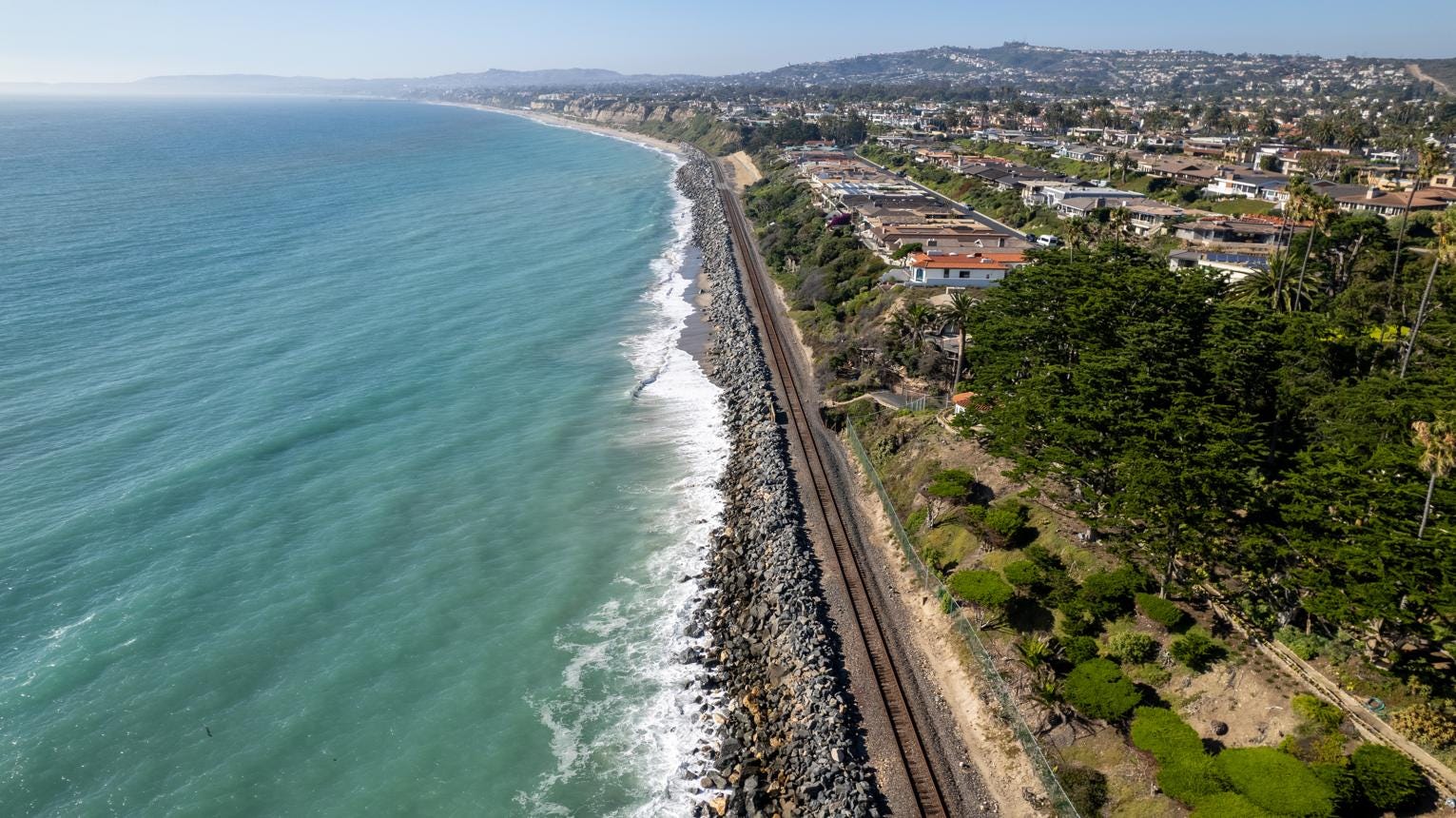
San Clemente’s coastal challenges have become increasingly visible in recent years.
Sections of the shoreline have narrowed dramatically, leaving less room for recreation and increasing the vulnerability of nearby infrastructure.
The railroad corridor running along the city’s southern coastline has experienced repeated disruptions as erosion, powerful surf, and unstable coastal conditions threaten the tracks.
Efforts to protect the railway have sometimes involved placing large rocks along the shoreline, creating tension between the immediate need to safeguard transportation infrastructure and the longer-term goal of preserving sandy beaches.
There has, however, been an important development.
On November 5, the California Coastal Commission approved a major shoreline protection initiative involving approximately 690,000 cubic yards of sand for San Clemente’s coastline.
The project represents meaningful progress, particularly in areas where the railroad and coastal infrastructure face immediate threats.
But much of that work is concentrated along the southern shoreline, and the broader question of how to maintain beaches throughout the city remains unresolved.
Federal and state assistance can help finance major restoration projects. What San Clemente still lacks is the predictable local funding that would allow it to plan and maintain coastal protection efforts over many years.
That distinction matters because grant-funded projects can address immediate needs without necessarily establishing a sustainable long-term program.
Wildfire Protection Faces Its Own Funding Challenge
While coastal erosion receives considerable public attention, wildfire risk presents another significant challenge for San Clemente.
The city’s residential neighborhoods border hillsides, open spaces, and vegetation that can become dangerous during periods of dry weather and strong winds.
The urgency became especially apparent during October’s Norte Fire, which forced thousands of residents to evacuate and destroyed seven homes, according to regional reporting.
Measure M supporters argued that dedicated funding could strengthen prevention efforts before another emergency occurs.
Such investments can include vegetation management, fuel reduction, and programs designed to limit the spread of wildfires near populated areas.
Without new tax revenue, city officials will need to determine how much protection can be maintained through existing budgets and whether additional resources can be secured elsewhere.
The issue is not simply whether San Clemente can respond to emergencies, but whether it can afford to invest sufficiently in preventing them.
Why Voters May Have Said No
The election results do not establish a single explanation for Measure M’s apparent defeat.
Some residents may have opposed higher taxes because of the cumulative cost of living in Southern California. Others may have questioned whether the city should prioritize existing resources differently or pursue additional outside funding.
A one-percentage-point sales tax increase would have added $1 to the cost of a $100 taxable purchase.
Although that amount may appear modest in isolation, the cumulative effect of taxes, housing costs, insurance premiums, and other household expenses can influence how voters evaluate new financial obligations.
In an interview with SFGATE following the election, San Clemente Planning Commission Chair Cameron Cosgrove acknowledged that economic pressures likely contributed to the result.
Cosgrove also expressed concern that the loss of dedicated funding would force difficult decisions about how the city allocates its existing resources.
His comments underscore the central tension: Residents may strongly value San Clemente’s beaches and open spaces while disagreeing about how much additional money local government should collect to protect them.
What Happens Next?
San Clemente now faces several possible paths forward.
The city could pursue additional state and federal grants, particularly those supporting coastal resilience, transportation infrastructure, and disaster prevention.
It could also expand regional partnerships with neighboring coastal communities that face similar erosion challenges.
One idea raised by local officials involves greater regional coordination of sand replenishment, potentially allowing communities to share equipment, resources, and project costs.
Another possibility is reallocating existing city spending toward coastal and wildfire priorities, although doing so could require difficult trade-offs involving other municipal services.
City leaders could eventually ask voters to reconsider a different funding proposal, but the contrasting outcomes of the 2024 and 2026 elections suggest that any future measure would require careful consideration of its structure, cost, and public support.
For now, no single alternative has emerged that would fully replace the approximately $15 million in annual revenue Measure M was expected to provide.
The Future of the Spanish Village by the Sea
San Clemente has long distinguished itself through its beaches, historic architecture, surfing culture, and connection to the natural environment.
Those characteristics are not simply amenities. They contribute to the city’s identity, support local businesses, attract visitors, and influence property values.
Preserving them requires investment, but the apparent rejection of Measure M demonstrates that residents expect city leaders to consider alternatives to higher sales taxes.
The immediate challenge is finding a way to reconcile those expectations with the physical realities of a changing coastline and the persistent threat of wildfire.
The election may have settled the question of whether San Clemente should adopt this particular tax increase.
It has not settled the larger question of how the community will pay to protect the qualities that make it San Clemente.
As the city approaches 2027, that question may prove to be one of the most consequential issues facing its elected leadership.
Susan McElroy
Columnist, The San Clemente Sun


Reporting sources: City of San Clemente election materials; Voice of OC, November 4, 2026; Spectrum News, October 2026; SFGATE, November 9, 2026. Election results referenced are preliminary as of publication.